
Hotel & Villa Guest App in North Cyprus: More Direct Bookings, Happier Guests
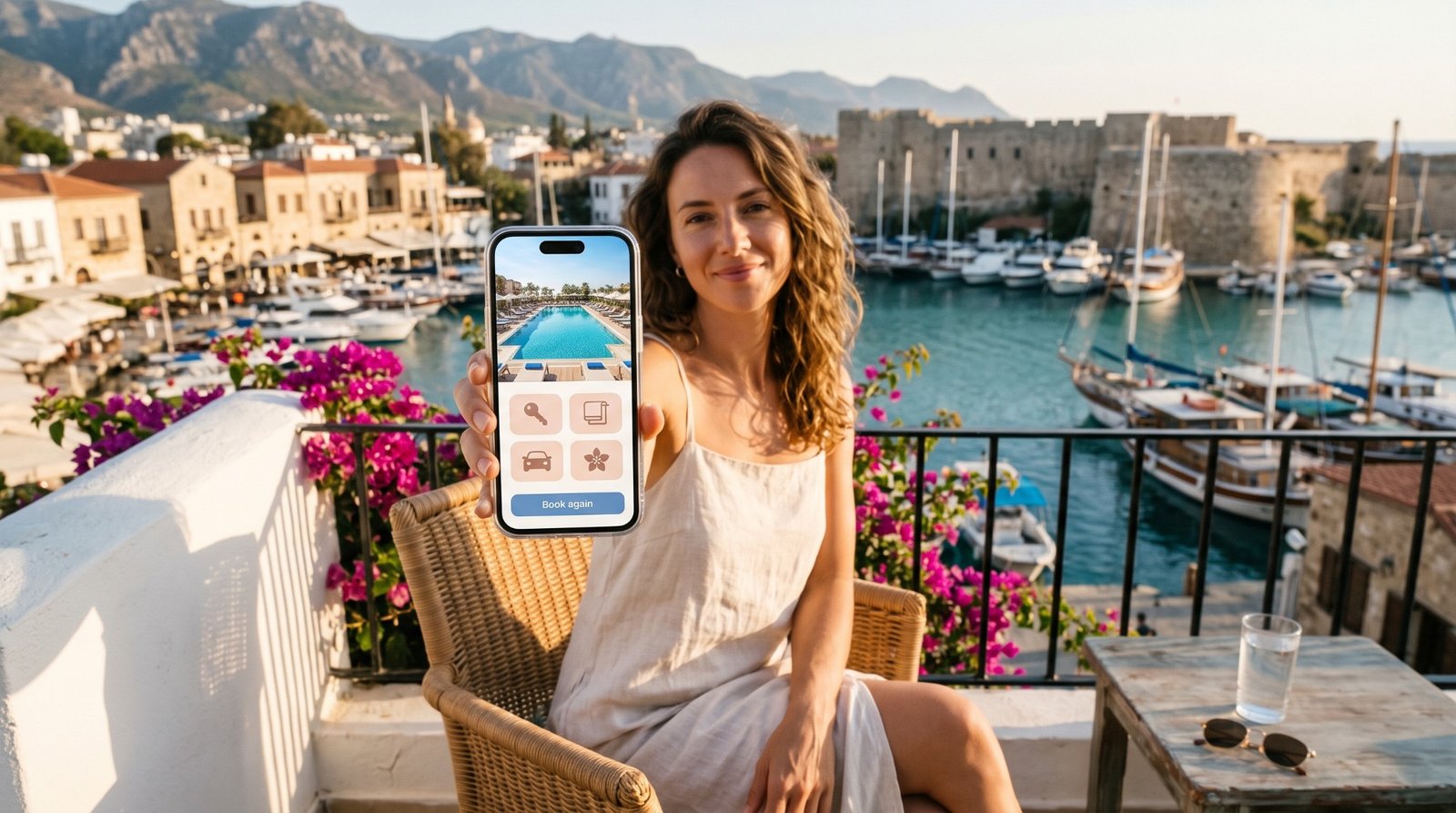
Tourism in North Cyprus is growing every year. Boutique hotels in Kyrenia, beach resorts around İskele and Long Beach, holiday villas in Esentepe and Bafra, and serviced apartments in Famagusta all compete for the same guests. Most of them arrive through booking platforms, and each of those bookings comes with a commission, often 15% or more. When the same guest comes back next summer through the same platform, the hotel pays that commission again.
A guest app changes that. It gives your guests a better stay, gives your team fewer phone calls, and gives you a direct line to people who already know and like your property. I’m a WordPress and Flutter developer based in Famagusta, and this guide explains what a hotel or villa app can do, which features actually pay back, and when a great website is all you need.
Why direct guests matter so much
Booking platforms are a great way to be discovered, and most properties will always use them. The problem starts when every booking, including returning guests, goes through them. A guest who stayed with you last year, loved the sea view and wants to come back is already your customer. Paying a commission to win them a second time is one of the most avoidable costs in hospitality.
An app keeps that relationship in your hands. After the first stay, the guest has your property on their phone, a member price for their next visit and a simple way to book directly. This is the same idea I explain in why businesses should stop renting their customers, and in hospitality the numbers are especially clear.
1. Easy check-in before arrival
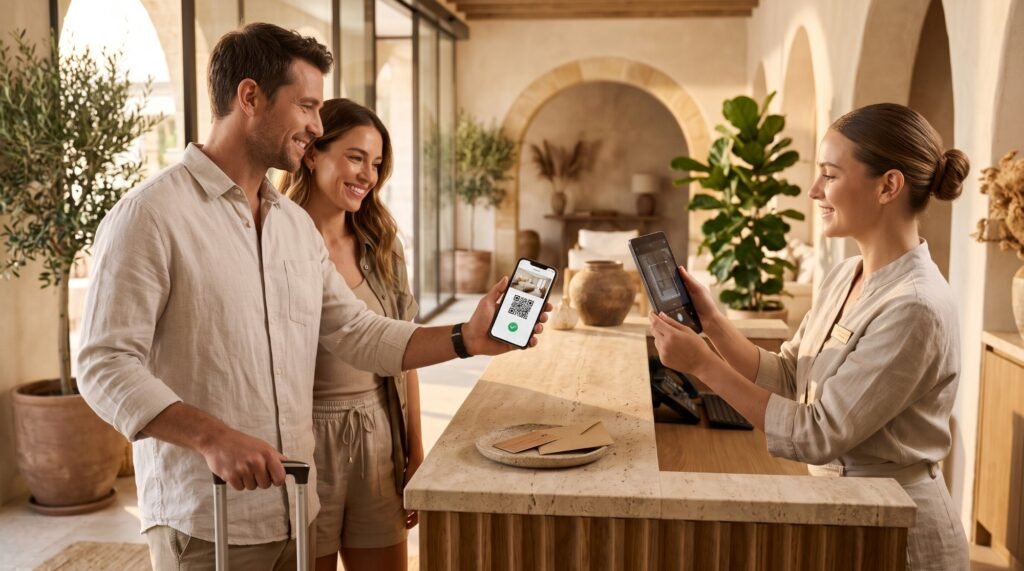
Many guests land at Ercan or Larnaca late in the evening after a long trip. An app lets them fill in their details, upload passport information and share their arrival time before they leave home. Your reception has everything ready, the guest gets their key in minutes, and nobody stands at the desk filling in forms. For villas and apartments, the app can show self check-in instructions, the key box code at the right moment and a short video of how to find the property.
2. A digital guest guide
The Wi-Fi password, breakfast times, pool and beach rules, how the air conditioning works, where to park, the nearest pharmacy and the best local restaurants: guests ask your team these questions every day. A digital guide in the app answers them instantly, in English, Turkish, Russian, German or any language your guests speak. You update it once, and it is always correct, which printed folders never are.
3. Requests and messages in one place
Extra towels, a late check-out, a cot for the baby or a broken light bulb: instead of calling reception, guests send a request with one tap. Your team sees it on a tablet or phone, knows the room number and can mark it as done. Requests are not lost between shifts, and guests feel looked after. A chat with reception, connected to WhatsApp if you prefer, keeps every conversation in one place.
4. Extras that guests actually want
Airport transfers, spa treatments, boat trips, car rental, a table at the hotel restaurant (see my guide to restaurant and café apps) or a birthday cake in the room: guests are happy to book these, as long as it is easy. In the app, each extra has a photo, a short description and a “book” button. This is often where a guest app pays for itself fastest, because a few extra bookings every week add up over a season. Your team decides what to offer and can change it any time from a simple admin panel.
5. Direct booking and a reason to come back
The most valuable screen in a hotel app is the one guests use after they go home. A member price, a free airport transfer or an early-booking offer for next season gives them a clear reason to book directly. A loyalty programme, with points for each night or each extra, makes the reward visible every time they open the app. Booking can connect to the channel manager or booking engine you already use, so availability stays correct everywhere.
6. Notifications with a purpose
Push notifications are free to send and land directly on the guest’s lock screen. Used well, they help: “Your room is ready”, “Happy hour at the pool bar starts at 5”, “Your airport transfer is at 9:30 tomorrow” or, months later, “Summer early-booking prices are open for members”. Used badly, they annoy people. A good app sends few, useful messages, and lets guests choose what they receive.

7. Reviews at the right moment
Happy guests rarely leave a review unless someone asks at the right time. The app can send a short, friendly message on the last day of the stay, with a direct link to your Google review page. If a guest is unhappy, a private feedback form lets them tell you first, so you can fix the problem while they are still at the property. More good reviews on Google also help you appear in local searches, as I explain in my guide to local SEO in North Cyprus.
8. Tools for your team, too
The same system can give your staff a simple view of what needs to be done: housekeeping status for each room, new guest requests, transfer times and extra bookings for the day. For villa owners and property managers with several units, it can show cleaning schedules, check-in times and maintenance tasks for every property in one place. Fewer phone calls and fewer forgotten tasks make a big difference in a busy summer.
When you do not need an app yet
An honest answer matters here. If you run one or two rooms, or most of your guests stay only once and never return, an app may not pay for itself yet. In that case, the best investment is a fast, beautiful website with a direct booking button, great photos and clear information. My guide to hotel and villa website design in North Cyprus explains the eight features that win direct bookings. Many properties start with the website and add an app later, when returning guests and extras become a bigger part of the business.
Website and app: one system
Your website brings new guests from Google; your app keeps them coming back. I build both: fast, multilingual WordPress websites and Flutter apps that share the same information, so an offer you add once appears on the website and in the app. With Flutter, one codebase runs on both Android and iPhone, so you do not pay for two separate apps, and updates are faster. A focused first version, with the guest guide, requests, extras and direct booking, can be ready for the summer season. See what affects the cost of an app and what to prepare before you hire a developer.
Frequently asked questions
Will guests really download a hotel app?
Yes, when it gives them something useful right away: faster check-in, the Wi-Fi password, easy requests and a member price for their next stay. Many hotels invite guests with a QR code in the booking confirmation, at reception and in the room. For guests who prefer not to install anything, the same guide can also open as a web page.
Can the app connect to our booking system?
In most cases, yes. Many channel managers and booking engines offer a way to connect, so availability and prices stay the same everywhere. If yours does not, the app can still send booking requests to your team, who confirm them as they do today.
Do we need separate apps for iPhone and Android?
No. I build with Flutter, so one app works on both iPhone and Android. Read more about cross-platform and native apps.
Is a guest app only for big hotels?
Not at all. Boutique hotels, villa owners with several properties and serviced apartment companies often benefit the most, because a small team has to answer every question and handle every request. A focused app takes a lot of that work away.
Run a hotel, resort, villas or serviced apartments in North Cyprus and want more direct bookings and happier guests? Get in touch and tell me about your property. You can also see my Flutter app developer services and web design services in North Cyprus.